What a Loading Unloading Conveyor Does—and Why It’s Vital for Today’s Warehouses
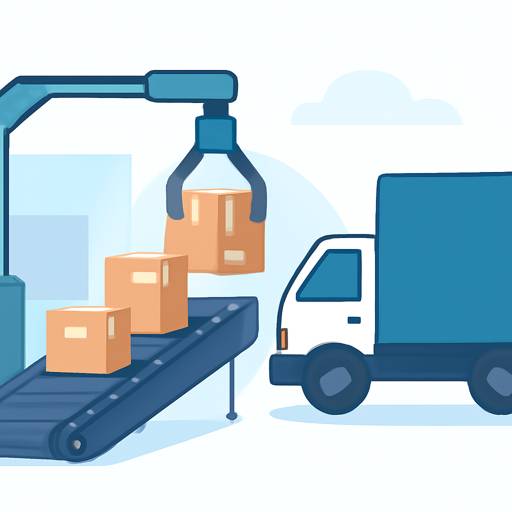
A loading unloading conveyor is the critical bridge between your dock and the vehicle or container you’re moving goods in and out of. Instead of relying on manual carrying, pallet jacks, or short, improvised roller sections, these engineered systems create a continuous, controlled flow of cartons, parcels, sacks, and totes from the warehouse to the trailer (and back). By mechanizing the most strenuous and time-consuming part of shipping and receiving, operations gain speed, consistency, and a significant reduction in ergonomic risk.
At its core, a loading conveyor or unloading conveyor is designed to extend into vans, trucks, and ocean containers, delivering items right where the hands of the operator need them. This reduces walking, twisting, and lifting—movements associated with fatigue and injury. It also brings standardization to a notoriously variable task: vehicle interiors differ, drivers arrive at different times, and shipment sizes fluctuate. A well-specified solution normalizes all of this, delivering reliable packages-per-hour (PPH) and cases-per-hour (CPH) performance regardless of the shift or season.
There are many configurations to match different load profiles. Telescopic belt conveyors use extendable “booms” to reach deep into a trailer, then retract to save floor space when not in use. Flexible motorized roller conveyors snake and bend to follow curved paths inside vehicles. Gravity skate-wheel options provide a low-cost, manual-assist solution for lighter loads. Mobile belt loaders, often on locking casters, bring precise positioning to awkward dock geometries and pop-up cross-docks. Choosing the right type depends on load weight, package dimensions, container length, dock layout, and desired throughput.
Beyond speed, the ROI drivers are clear. Reducing manual touches lowers product damage and returns. Creating predictable, paced flow reduces bottlenecks at the dock and upstream in sortation or picking. For express delivery, e-commerce fulfillment, cross-border consolidation, and industrial shipping, the effect is compounding: faster turnarounds, less detention, and higher trailer fill rates. Many facilities report payback windows within 6–18 months when replacing manual loading with a purpose-built loading unloading conveyor solution, especially where peak volumes and labor scarcity collide.
Technologies and Features That Differentiate a High-Performance Loading Unloading Conveyor
The best systems combine rugged mechanics with intelligent controls, ergonomic design, and integration capacity. Start with the mechanics. Telescopic belt conveyors typically extend in two to five boom sections, bringing 10–18 meters of reach into a 40-foot container while maintaining belt tracking and speed stability. Variable frequency drives enable smooth starts, reversible direction, and speed ranges matched to package characteristics. Elevation adjustment aligns working height to the operator’s comfort, and options like a man-rider platform or operator console at the boom tip keep controls where the work happens.
Belt selection matters. Friction belts support polybags and irregular packages; rough-top or grip belts tackle steeper angles; oil-resistant belts handle industrial parts. For heavier cartons, powered roller sections or chain-driven roller modules absorb impact and maintain consistent spacing. On flexible lines, reinforced scissor frames and sealed swivels allow tight curves without compromising load capacity. Robust frames, powder-coated finishes, and sealed bearings fight corrosion and dust, critical for cross-border or coastal environments where humidity and fine particulates are common.
Safety should be visible and multi-layered. Expect pull-cord E-stops along the entire machine length, mushroom push-buttons at multiple points, anti-collision photoeyes on boom tips, “safe approach” warning lights, and soft bumpers. Good design minimizes pinch points, adds toe-guards, and keeps noise levels comfortable for long shifts. Ergonomics—such as low-friction chutes, adjustable guides, and assist handles—reduce strain while helping crews keep pace without overexertion.
Controls and connectivity increasingly define the value of a loading unloading conveyor. Programmable logic controllers (PLCs) with intuitive HMIs provide fault diagnostics, mode switching (load/unload), and recipe-driven speeds. Integration with WMS/WCS allows conveyor status to gate trailer assignment and manifesting. Add-on DWS (dimensioning, weighing, scanning) stations capture data upstream so that shipping charges and routing rules are validated before cartons even hit the dock. IoT sensors monitor motor temperatures, bearing vibration, and duty cycles, enabling predictive maintenance and higher uptime.
Serviceability rounds out the spec sheet. Look for modular design with quick-change belts and roller assemblies, accessible grease points, and standardized spare parts. Clear maintenance windows, lockout/tagout provisions, and hinged guards support a safe, fast PM routine. Many leading Asian manufacturers—especially those operating near major export corridors—have invested heavily in these details, packaging durability and innovation into flexible product lines. For a deeper view of configurations, accessories, and performance ranges, explore a loading unloading conveyor catalog to match options to your dock and vehicle mix.
Real-World Applications: Express, Cross-Border, and Industrial Scenarios That Benefit Most
Parcel and express hubs are prime users, where every minute at the dock ripples through the entire network. Consider a facility pushing 2,400 parcels per hour through a pair of docks. With manual unloading, a 53-foot trailer might tie up a bay for over an hour and require frequent labor rotations. By deploying a telescopic belt truck loading conveyor with powered accumulation at the boom tip, the same site can commonly cut unload time by 30–50%, often turning a full trailer in 30–40 minutes while reducing headcount per door. Just as important, parcel damage and mis-sorts fall as operators receive a consistent, metered flow.
Cross-border logistics—particularly common in high-volume gateways—benefits from robust systems that handle varied packaging and long operating hours. Mixed-load 40-foot containers arriving from multiple suppliers often include cartons, sacks, and strapped bundles. A hybrid approach works well: boom conveyors for reach, followed by flexible motorized roller segments that can curve and collapse when space is tight. This configuration adapts to irregular container packing and keeps throughput steady, even when loads are not palletized. In coastal regions and humid climates, choosing corrosion-resistant finishes and IP-rated components protects uptime in the face of moisture and salt-laden air.
In industrial shipping and receiving, where outbound goods are box-packed and inbound materials arrive loose, a loading unloading conveyor becomes a standard work cell. Assembly plants can stage completed cartons on accumulation lines that feed directly into the dock boom, enforcing first-in-first-out discipline and smoothing flow from production to transport. On the inbound side, the same system in reverse moves components quickly to kitting areas or automated storage. Integrating scanner tunnels lets operators capture serial numbers and lot codes during load/unload, eliminating extra touches later in quality control.
Regional distribution centers in fast-growing manufacturing belts have shown how thoughtful deployment multiplies benefits. One South China 3PL supporting apparel and small appliances converted four manual docks to telescopic booms with flexible powered outfeeds. Average unload time per 40-foot container dropped from 70 to 38 minutes, floor congestion decreased due to better pacing, and order lead times improved by nearly an hour during peak. Ergonomic claims declined as the heaviest lifts were eliminated near the deepest parts of the container, where twisting is most common.
Implementation best practices are straightforward but essential. Start with a dock survey: door spacing, approach angles, trailer mix (vans, containers), and floor conditions inform reach, belt width, and mobility needs. Validate electrical capacity and plan cable runs to avoid trip hazards. Specify safety features suited to shift patterns: for example, add LED tip lights and audible motion cues for night work. Build staff training around standard work, safe body positions, and quick fault recovery. Finally, align maintenance with production: adopt weekly cleaning and visual inspections, monthly belt tracking checks, and quarterly component audits. When these fundamentals are in place, the system’s total cost of ownership improves year over year through reduced energy consumption, less product damage, and higher labor productivity.
Sustainability is an added win. Right-sizing motor power with high-efficiency drives, enabling sleep modes for idle sections, and using regenerative braking on inclined segments can trim energy usage. Less manual handling means fewer damaged cartons and repacks, reducing waste and rework materials. Over time, data from connected controls can fine-tune shift planning, ensuring conveyors run only as fast and as long as necessary to meet service levels. In the end, a well-engineered, well-integrated loading conveyor and unloading conveyor setup is more than dock equipment—it is a dependable flow enabler that supports growth, protects people, and keeps promises to customers across local and international networks.